 Find a Market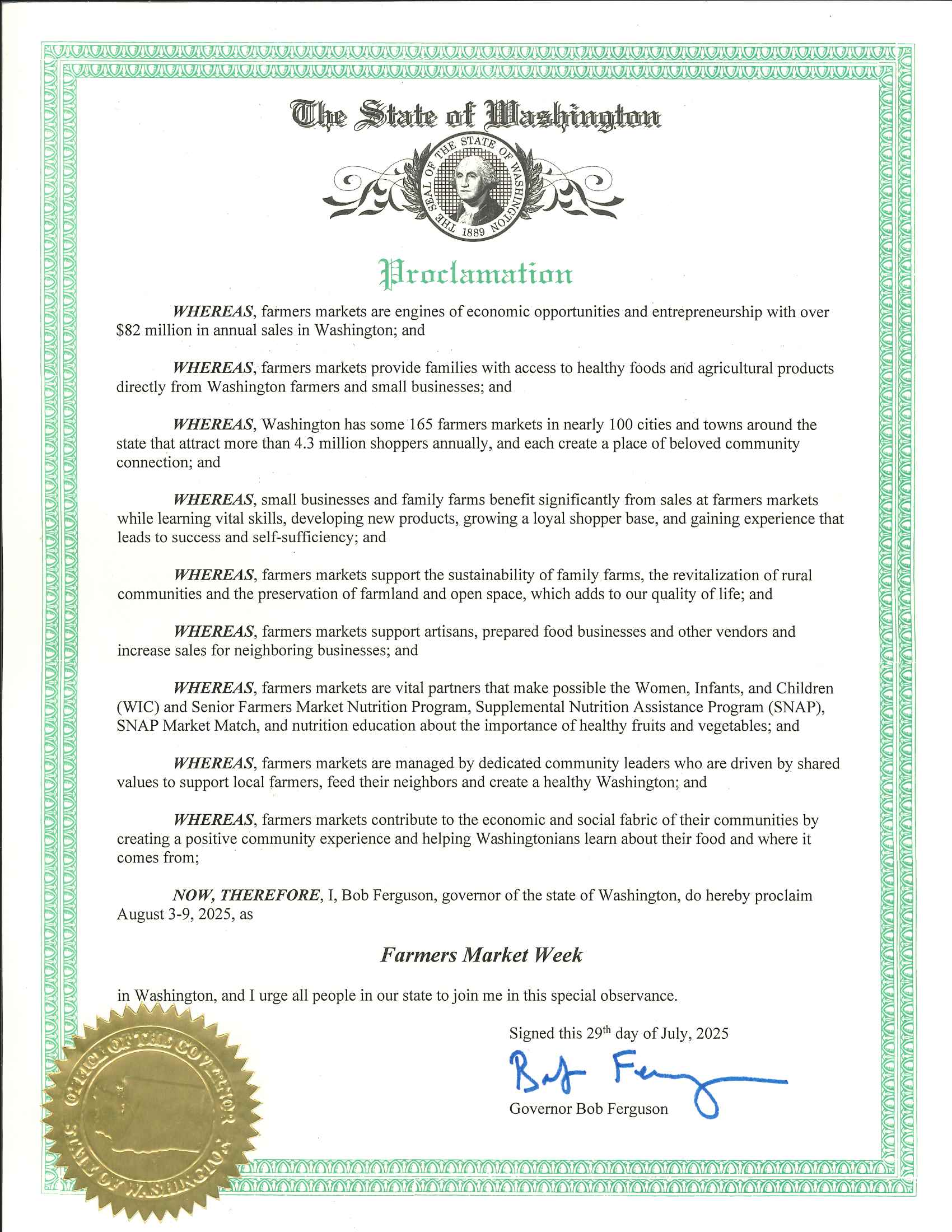
 2025 “Farmers Market Week” Proclamation from Governor Ferguson
2025 “Farmers Market Week” Proclamation from Governor Ferguson
In 2024, WSFMA member farmers markets reported $ 83,673,257 in total vendor sales.
These sales have deep local impacts, and are vital to launching new businesses, creating jobs, supplementing and securing livelihoods.
WSFMA member farmers markets were open 2,666 market days in 2024, creating economic opportunities for 6,388 small businesses that produce and sell fresh fruits and vegetables, local meats, dairy, eggs; jams, salsas, and a creative range of value-added products; as well as one-of-a kind crafts, and ready-to-eat foods.
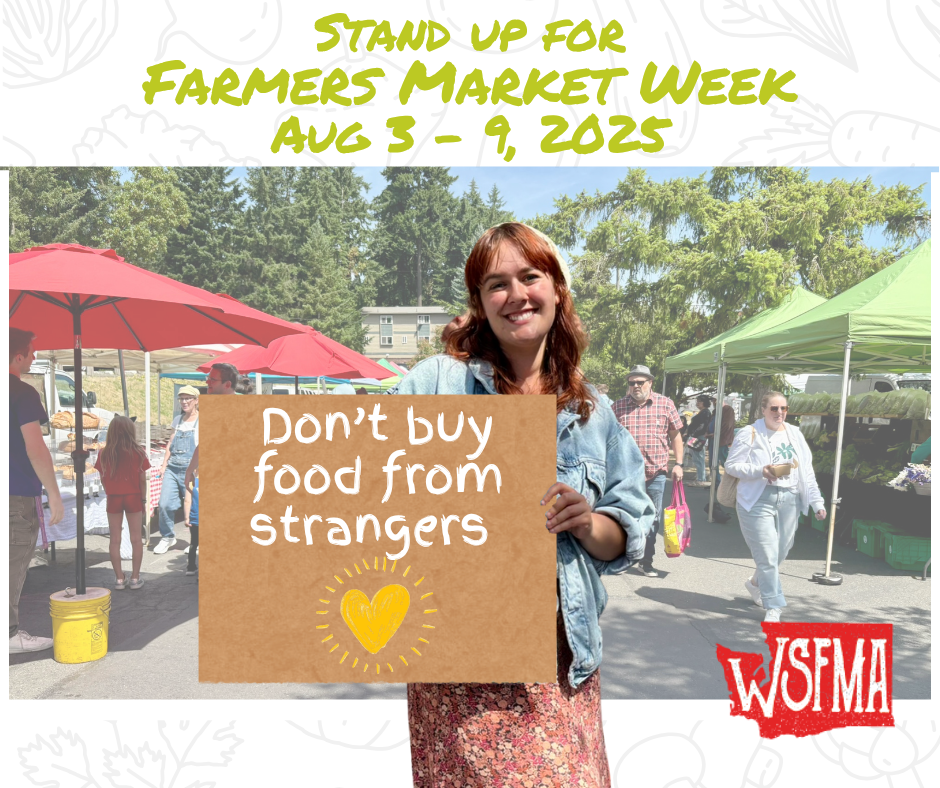
Getting to know “your” farmer or artisan or food stop is core to the farmers market experience. Over the seasons, we look forward to the warm recognition and learning about the kaleidoscope of stories, one booth at a time.
Uniqueness and variety are valued at farmers markets over the anonymous and impersonal produce sections with displays of posters of farmers – not the real people.
Ask questions and learning where your food comes from!
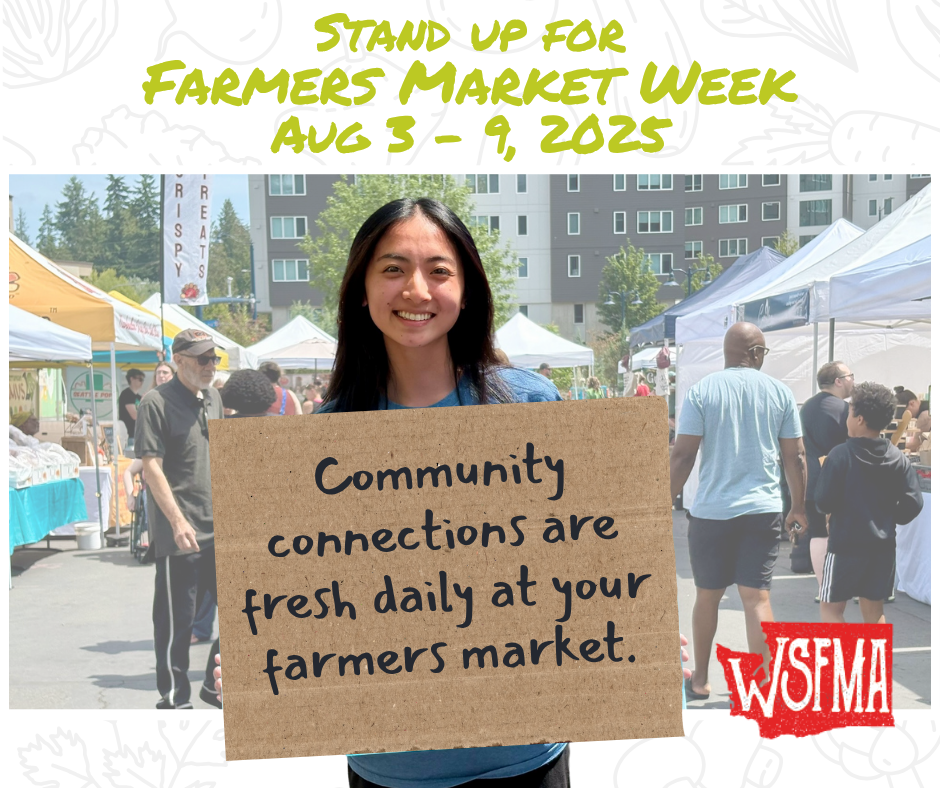
Over 4,500 volunteers donate their time and talents to their local farmers market each year.
Community volunteers are driven by the shared values of supporting local farmers, bringing good food into their community, and creating a healthy Washington for everyone.
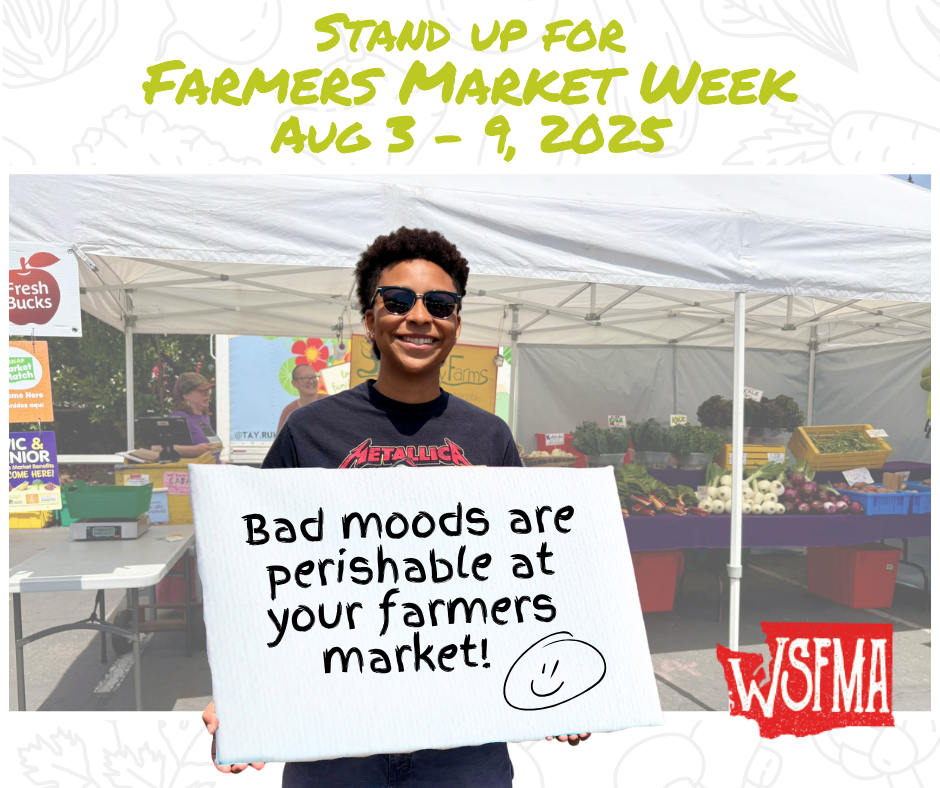
The bright colors, fresh air, gentle strolls, and great smells at farmers markets lift any mood.
Science tells us that informal, short, regular interactions with people we see at places like a farmers market help us feel connected and less lonely.
And let’s not forget the music from amazing buskers, choir groups, and every variety of local talent!
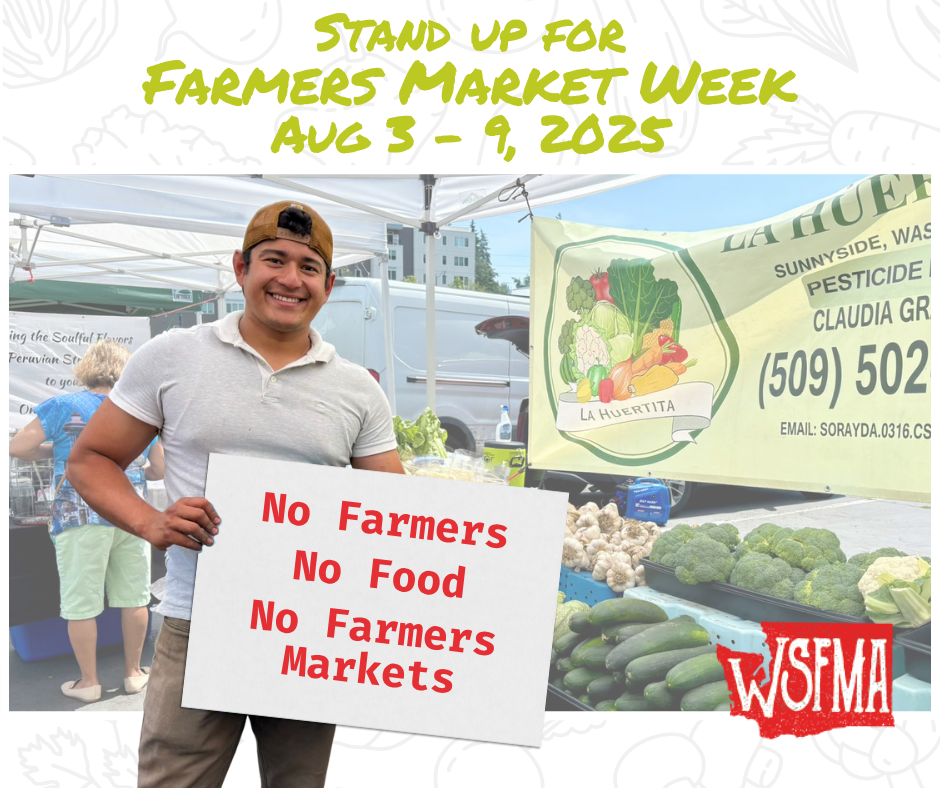
WSFMA member farmers markets focus on supporting farms and Washington agriculture.
Statewide, $ 41,298,045 in sales went to farmers who grow, raise, harvest their products and farmers who make value-added products using ingredients from their own farm.
By selling direct to consumers, farmers receive the full “food dollar” at farmers markets; they are able to test new products to find out what their shoppers like; and they learn the business ropes from mentors and managers.
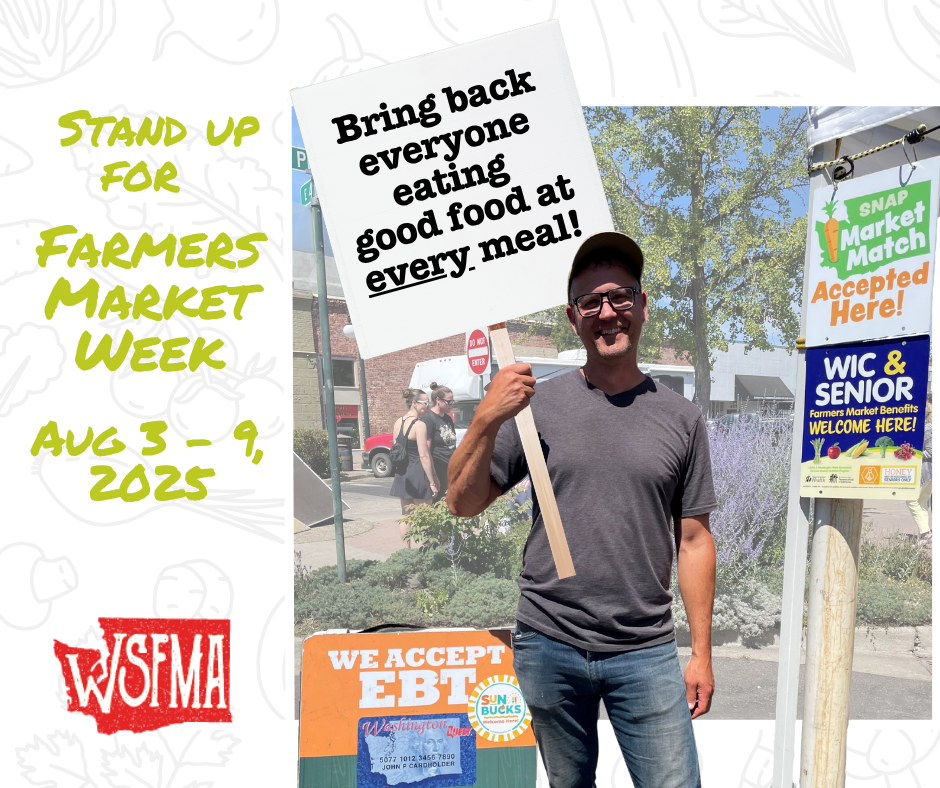
Farmers markets are vital partners in food access programs such as the WIC and Senior Farmers Market Promotion Program (FMNP), SNAP, SNAP Market Match, and SUN Bucks.
In 2024, low-income families used over $4.8 million to buy fresh fruits, vegetables, and other staples directly from farmers and food businesses.
Through the SNAP Nutrition Education program, families also learn how to prepare nutritious foods at their farmers market.